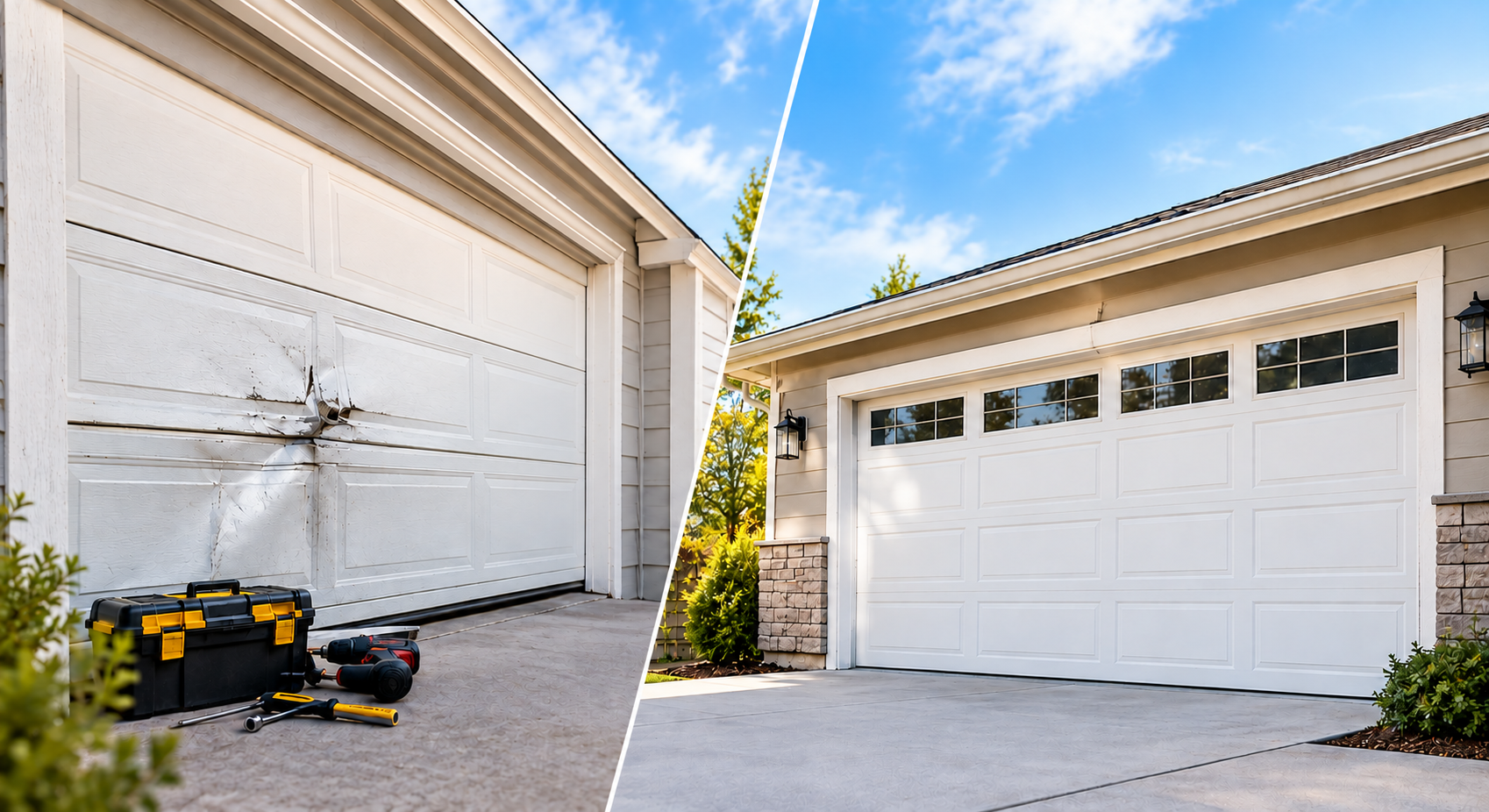
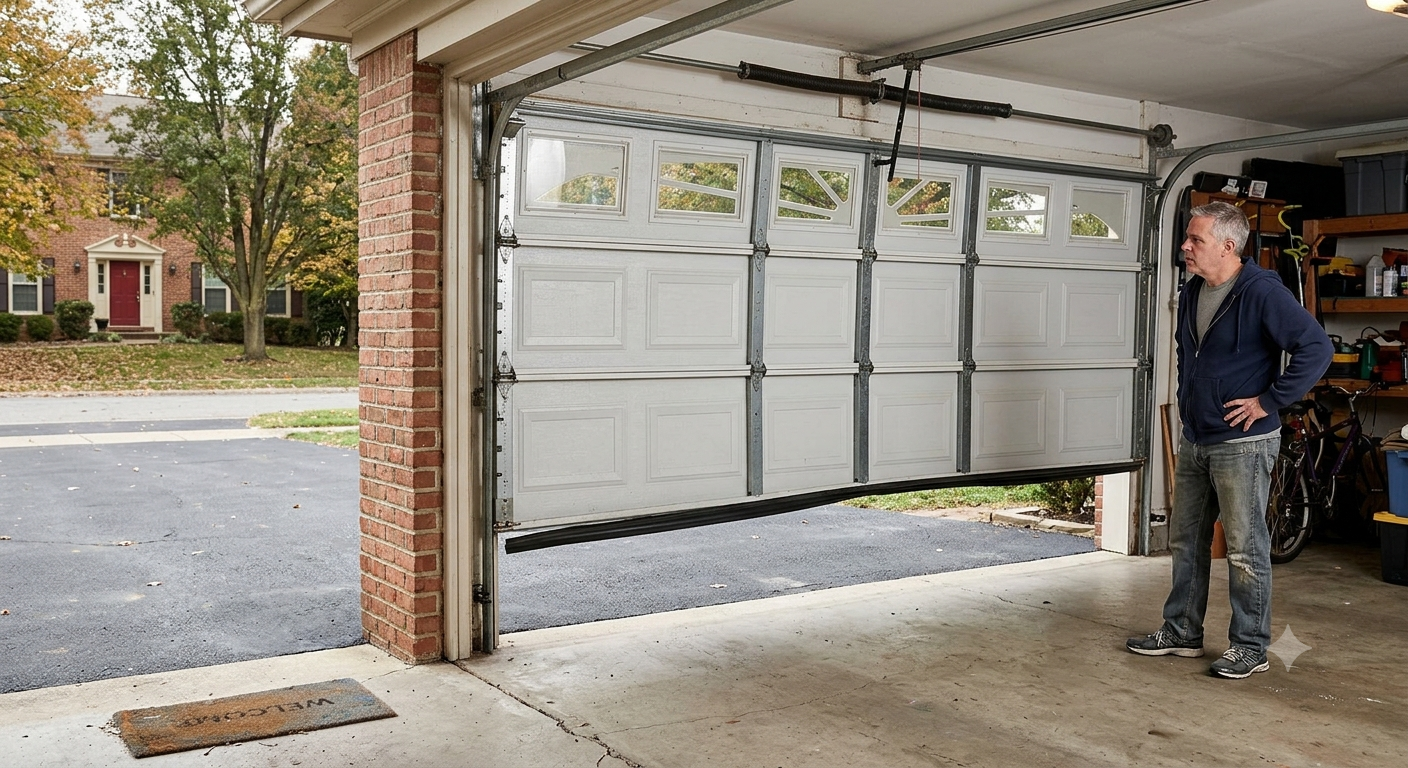
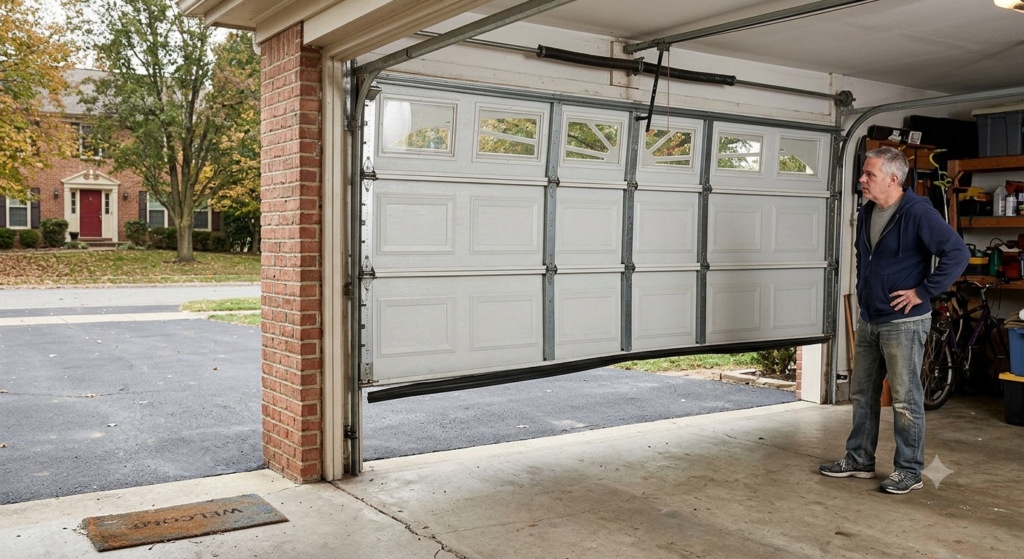
When a garage door won’t open fully, the cause is usually one of four things:
- the opener is set to stop too early
- something is blocking the track
- a roller or bracket has worn out
- a spring has lost its strength.
The first two you can often check yourself in ten minutes. The last two need a technician. We repair garage doors across Alabama and this guide walks through each cause in the order we would check it, so you know what to try, what to leave alone and when to call.
Common Reasons a Garage Door Won’t Open All the Way
Here is a quick look at what usually sits behind a garage door that stops short, hangs crooked or lifts only partway.
- Opener travel limit set too low. The opener thinks the door is fully open when it is not.
- Debris or damage in the track. The rollers catch on something and the door stalls.
- Worn rollers or loose brackets. The door binds on one side and the opener quits.
- Weak or broken springs. The door is too heavy for the opener to lift the whole way.
- Frayed or slipped cables. One side of the garage door hangs lower than the other.
Start With the Opener Settings
If the garage door moves smoothly but simply stops a foot or two short of the top, the travel limit is the first thing to look at. Most openers have a setting, usually a dial, screw or button sequence, that tells the motor where the open position ends. If that setting drifts or was never set right, the door stops early.
Your owner’s manual shows how to adjust it for your model. Change it a little at a time and test the garage door after each adjustment.
One warning here. Do not raise the force setting to push the door through a problem. Federal rules require residential openers to reverse when they meet an obstruction and the eCFR text of 16 CFR Part 1211 spells out that requirement. Turning the force up to overpower a stuck door can defeat that protection and does nothing about the real cause.
Check the Tracks and Rollers
A garage door runs on two vertical tracks and a horizontal track overhead. Anything that catches in them can stop the door before it reaches the top. With the garage door closed and the opener unplugged, take a look at both sides.
- Wipe out dirt, leaves or debris sitting in the track.
- Look for dents, bends or gaps where track sections meet.
- Check that the brackets holding the track to the wall are tight.
- See whether any rollers look cracked, flat or worn down.
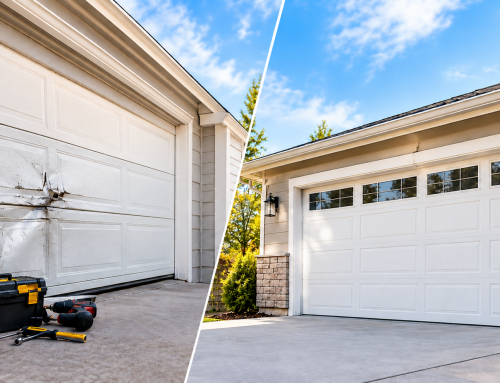
A bit of dust is easy to clear. A bent track or a roller that has jumped out is a different story. Hammering a track back into shape rarely works and can make the alignment worse. If the damage is more than surface dirt, that is a job for our garage door repair team, who can realign or replace the track and rollers properly.
Look at the Springs and the Weight of the Door
The opener does not lift the garage door by itself. The springs carry most of the weight and the opener just guides the door along. When a spring wears out, the door feels much heavier than the motor expects. The opener may lift it partway and give up or it may not lift it at all.
Signs that a spring is the problem:
- The garage door opens a short way, then stalls or drops back down.
- The opener hums or strains but the door barely moves.
- You heard a loud bang from the garage recently.
- You can see a gap in the coil of the spring above the door.
Leave springs alone. They hold a lot of stored tension and adjusting or replacing one without training is how people get hurt. If you suspect a spring, stop using the garage door and call for service. Trying to keep going with a weak spring also wears out the opener faster.
Uneven Opening Points to a Cable Problem
If one side of the garage door lifts higher than the other or the door looks crooked as it rises, a lift cable may be frayed or off its drum. This is not something to fix at home. The cables sit under load and a door that is already uneven can jam or fall further if it keeps running. Turn off the opener and have a technician look at it.
What You Can Fix Yourself and What to Leave to a Technician
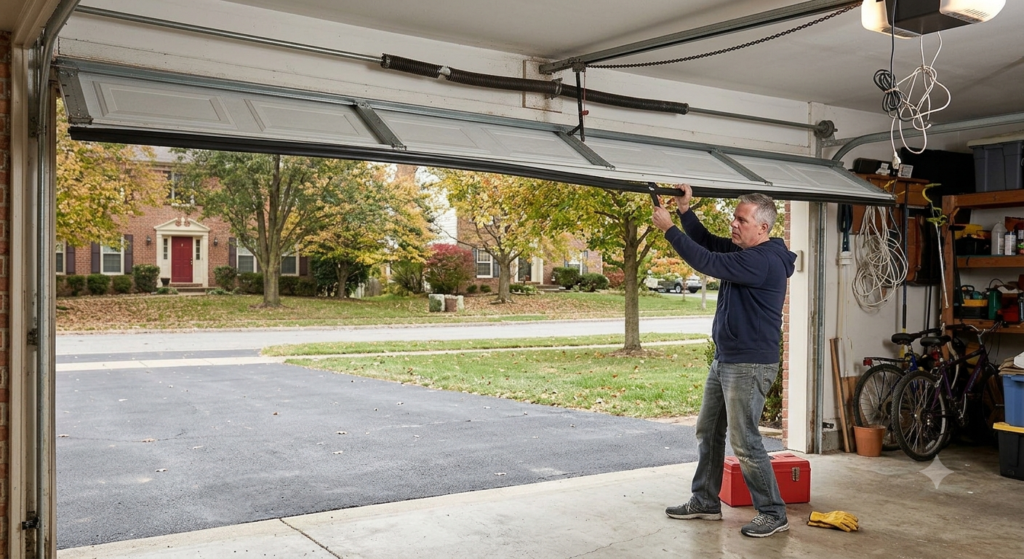
Fix a Garage Door That Won’t Open Fully
It helps to know where the line is.
Reasonable to try at home:
- Clearing debris from the tracks.
- Tightening loose bolts on track brackets.
- Wiping the tracks and applying garage door lubricant to the hinges and rollers.
- Adjusting the opener travel limit, following your owner’s manual.
Leave to a professional:
- Anything involving springs.
- Cables that are frayed, loose or off the drum.
- Bent or damaged tracks.
- Rollers or hinges that need replacing on a door that is already out of alignment.
- An opener that still won’t open the garage door fully after the limits are set correctly.
What a Technician Checks During a Visit
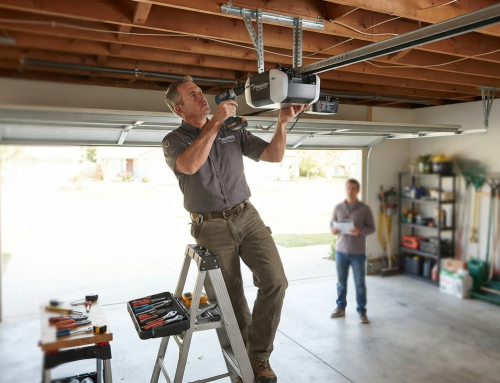
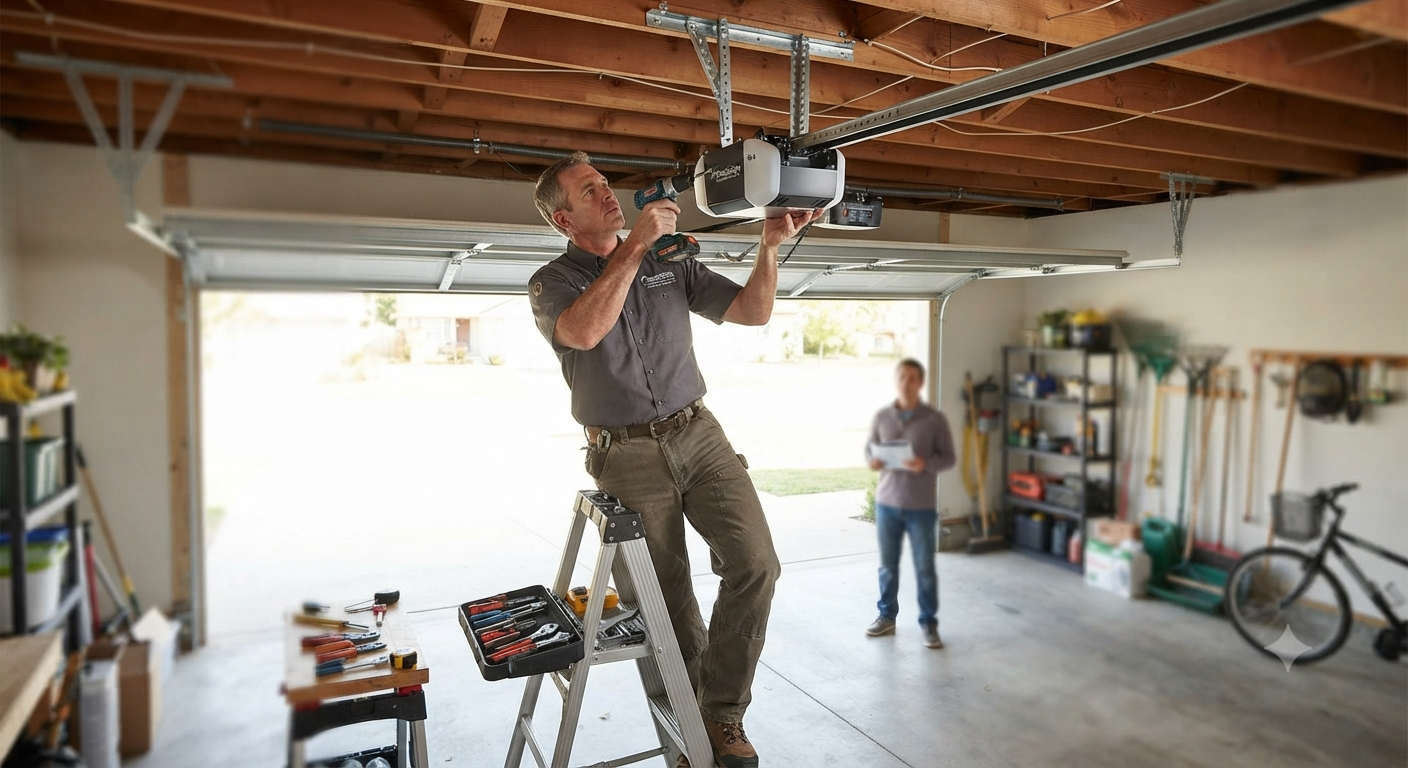
Knowing what happens on a service call takes some of the guesswork out of it. When we arrive for a garage door that will not open fully, we work through the system in a set order so nothing gets missed.
- We watch the garage door run to see exactly where it stops and how it moves.
- We check the opener limits and confirm the safety features still respond correctly.
- We inspect the tracks, rollers, hinges and brackets for wear or misalignment.
- We look at the springs and cables and check the balance of the door.
- We explain what is found and what it will cost before any work begins.
The travel limit is the first thing to look at if the garage door moves smoothly but simply stops a foot or two short of the top. Most openers have a setting usually a dial, screw or button sequence that tells the motor where the open position ends. The door stops early if that setting drifts and was never set right.
Why It Is Worth Fixing Sooner
A garage door that stops short is not just an annoyance. If the opening is low, a taller vehicle may not clear it. The motor also works harder every time it fights a door that binds or is out of balance. That shortens the life of the opener. Small problems like a loose bracket or a worn roller are cheap to fix. They can turn into a bent track or a failed spring if left alone.
If your garage door is old and keeps giving you different problems, replacement may be the better route. Our Clopay garage door lineup shows the styles and materials we install if you would rather start fresh.
When to Call Us
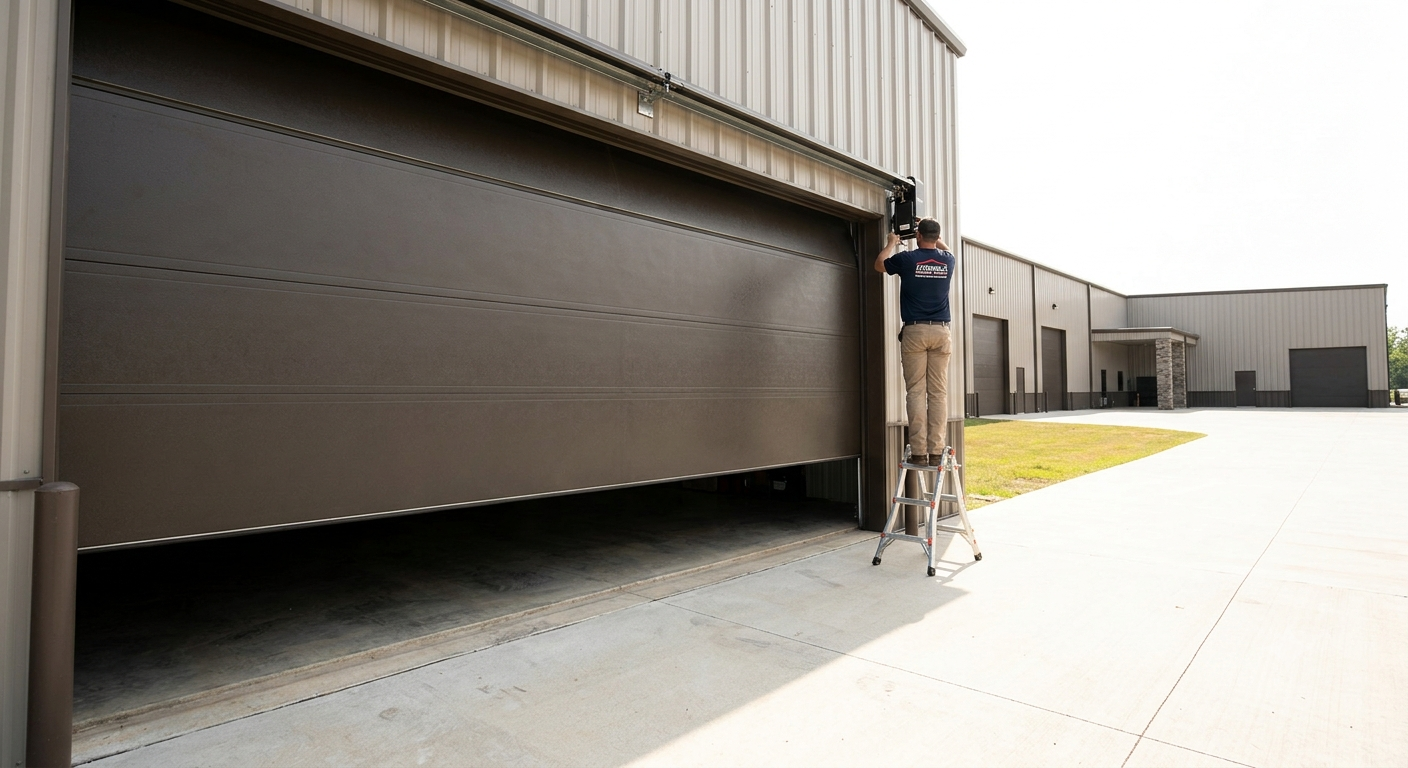
If you have checked the tracks and the opener limit and the garage door still will not open fully, stop testing it. Every extra cycle puts strain on the parts that are already struggling. We handle spring, cable, track and opener repair for homes and businesses across Alabama, including Birmingham, Montgomery and Tuscaloosa and we are available around the clock when a stuck garage door can’t wait. Call us to tell what the door is doing and we will tell you plainly whether it sounds like a quick fix or something bigger.
FAQs
Can I keep using my garage door if it only opens partway?
It is better not to. A garage door that stops short is usually straining the opener or a worn part and each extra cycle can add to the damage.
Will a new remote fix a garage door that won’t open fully?
No. The remote only tells the opener to start. Stopping short comes from the opener limits or a problem with the door itself.
Should I lubricate the garage door if it stalls halfway?
A light coat of garage door lubricant on hinges and rollers can help if things are dry. It will not fix a bent track, a weak spring or a wrong limit setting.
Why does my garage door open higher on one side?
That usually points to a cable that has slipped or frayed. Stop using the door and have it inspected.
How long does this kind of repair usually take?
Many repairs are finished in a single visit, though it depends on the part and whether it is in stock.