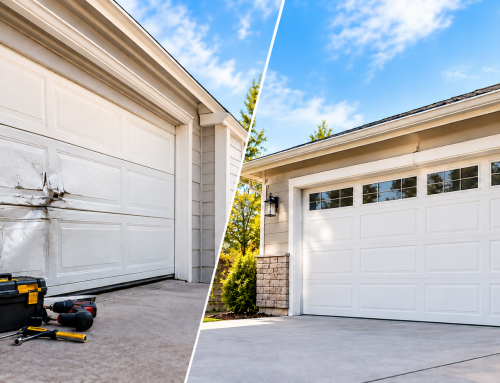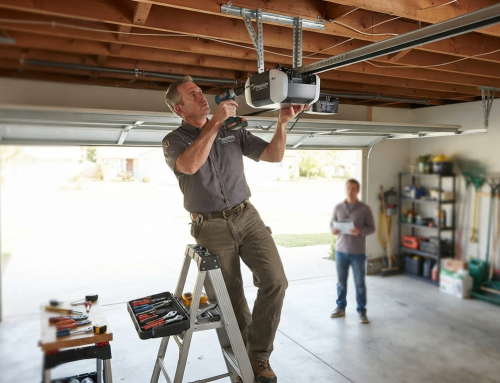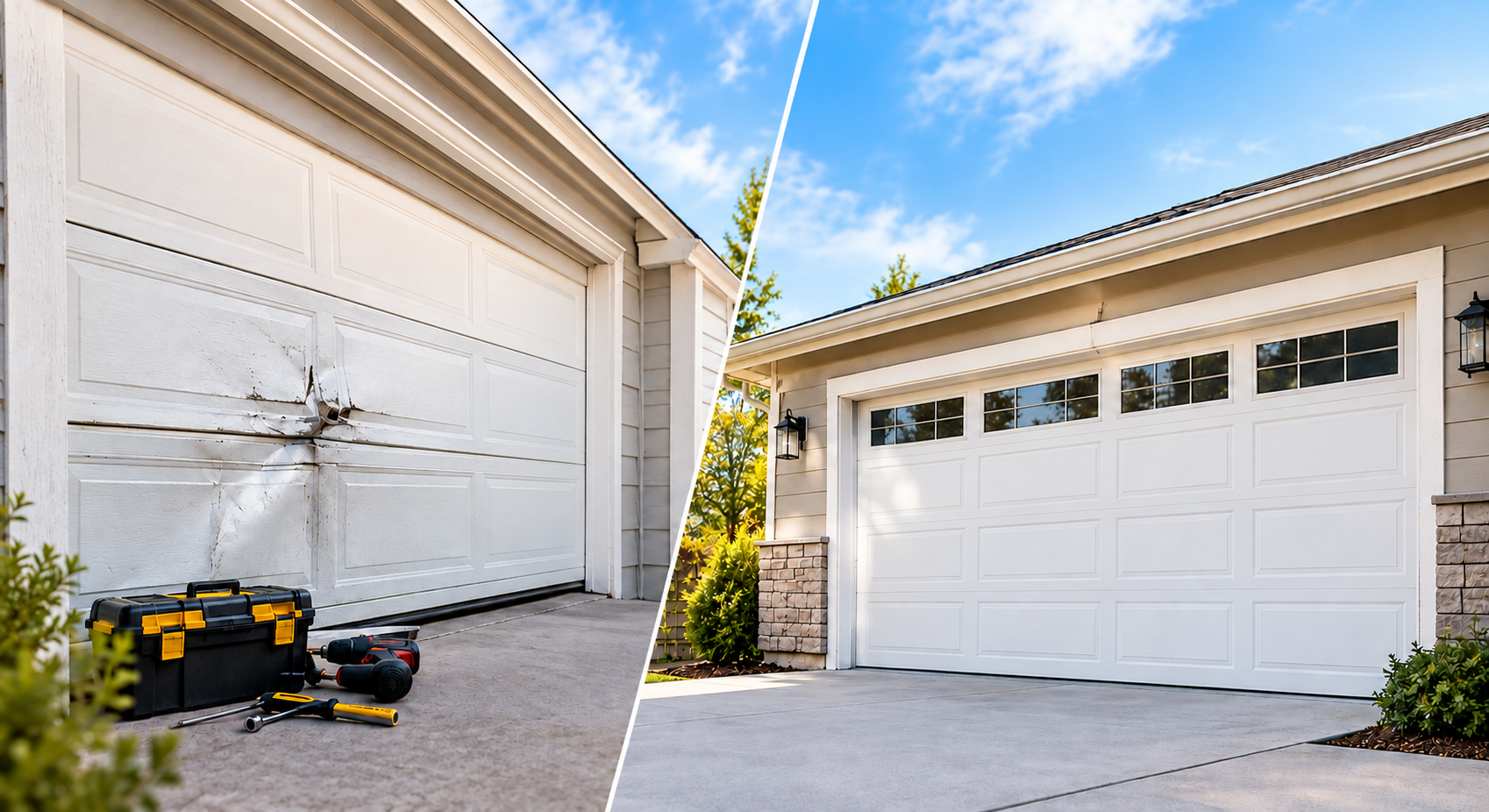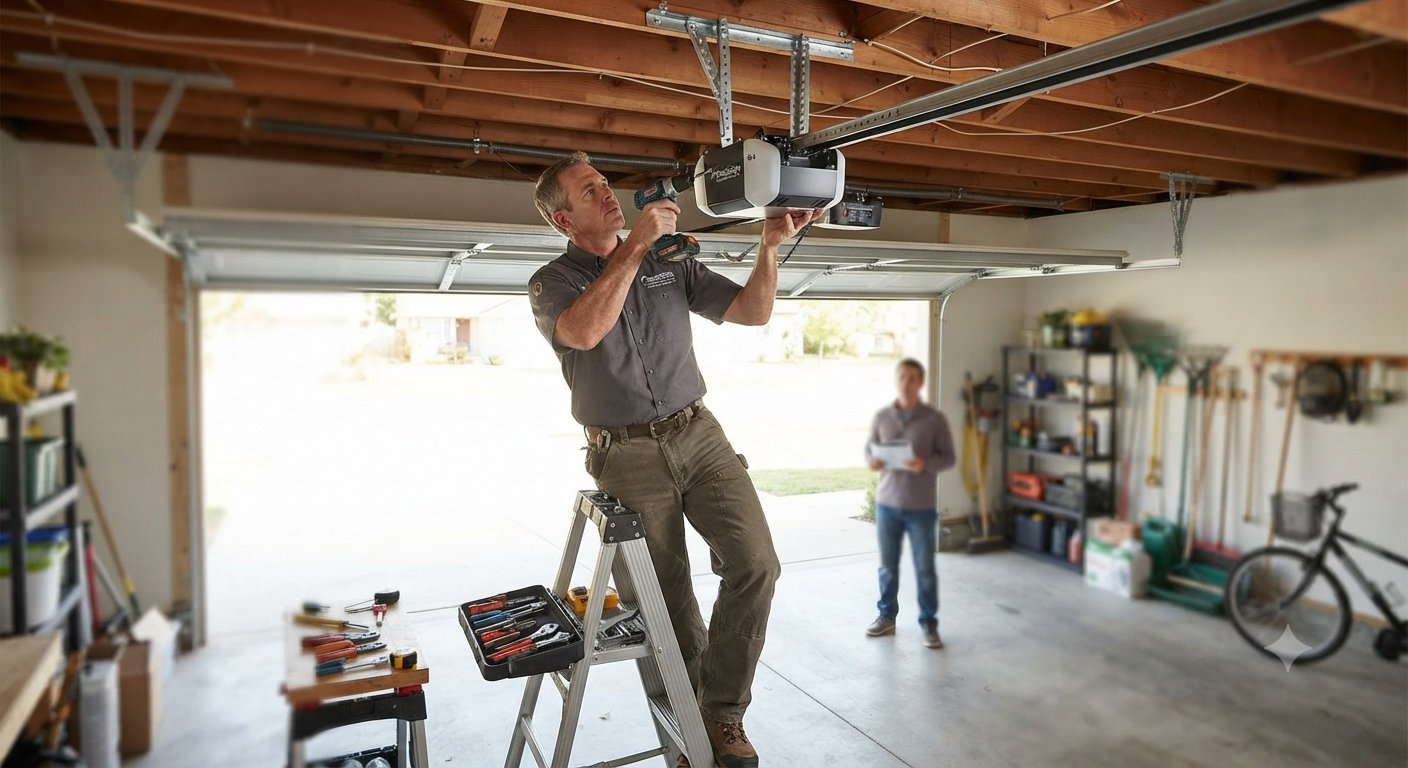
Four checks cover most of what matters for garage door safety: the auto reverse function, the photo eye sensors, the visible hardware (springs, cables, rollers and track) and the balance of the door. You can look at all four in about fifteen minutes and none of them need special tools. At Affordable Garage Doors, our annual tune ups and safety inspections cover these same areas and we repair springs, cables, rollers, sensors and openers when something fails. Here is how to run each check at home and what the results mean.
Garage Door Safety Checklist at a Glance
- Auto reverse: The door should stop and go back up when it touches an object.
- Photo eye sensors: The door should stop or reverse when the beam is blocked.
- Springs, cables, rollers and track: Look for fraying, rust, gaps or bending. Do not touch the springs.
- Balance and manual release: The door should move smoothly and stay put when lifted by hand.
1. Test the Auto Reverse
Auto reverse is the opener’s backup protection. If the closing door meets an obstruction, it should stop and travel back up.
Federal rules back this up. The U.S. Consumer Product Safety Commission states that residential garage door operators must reverse a downward moving door within two seconds of contacting a test block placed on the floor. The same notice says operators made after January 1, 1993 need added entrapment protection, such as photo eyes or an edge sensor.
How to test it:
- Open the door fully and clear people and pets from the area.
- Lay a 2×4 flat on the floor, centered under the door. Your opener manual may specify a slightly different board so check it first.
- Press the button to close the door.
- The door should touch the board, stop and reverse. Remove the board afterward.
If it fails: Do not keep using the opener to close the door. Force and travel limits sometimes need professional adjustment and those settings should never be turned up just to get the door to close. Our garage door repair team can test and correct the system.
2. Check the Photo Eye Sensors
Photo eyes are the two small units mounted near the floor on each side of the door. They send a beam across the opening. If something breaks that beam while the door is closing, the door should stop and reverse.
How to test them
- Look at the indicator lights on both sensors. They should be steady and not flickering.
- Wipe the lenses with a dry cloth. Dust, cobwebs and sunlight can interfere.
- With the door open, press the close button and pass an object through the beam, such as a broom handle held at a safe distance. Keep your body out of the door’s path.
- The door should stop or go back up.
Common problems
- One sensor was bumped and is now out of alignment
- A loose bracket or a damaged wire
- A blocked lens
Never bypass or disable sensors that keep misbehaving even if the cause seems minor. The fix is usually quick and a technician can realign or replace them.
3. Inspect the Springs, Cables, Rollers and Track
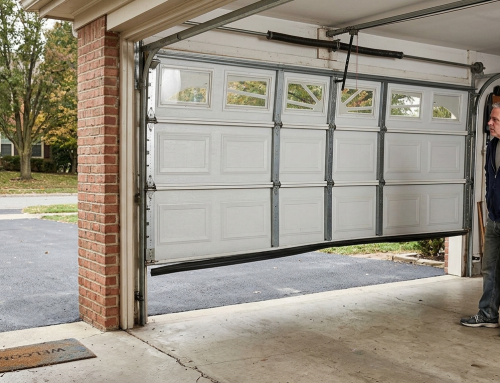
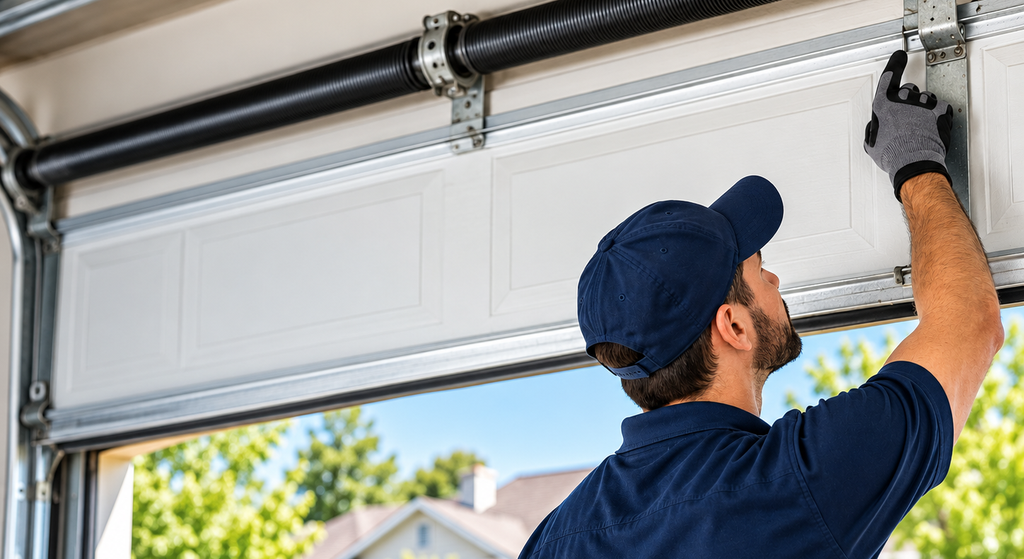
This is a visual check only. Torsion springs and cables hold a lot of tension so they should be inspected by eye and repaired by a professional.
Look for these signs:
- Springs: Visible gaps, rust, stretched coils or a spring that has separated
- Cables: Fraying, kinks or broken strands
- Rollers: Wobble, cracks, flat spots or rollers sitting loose in the track
- Tracks: Bends, dents or tracks that are pulling away from the wall
- Hinges and brackets: Cracks, loose bolts or missing hardware
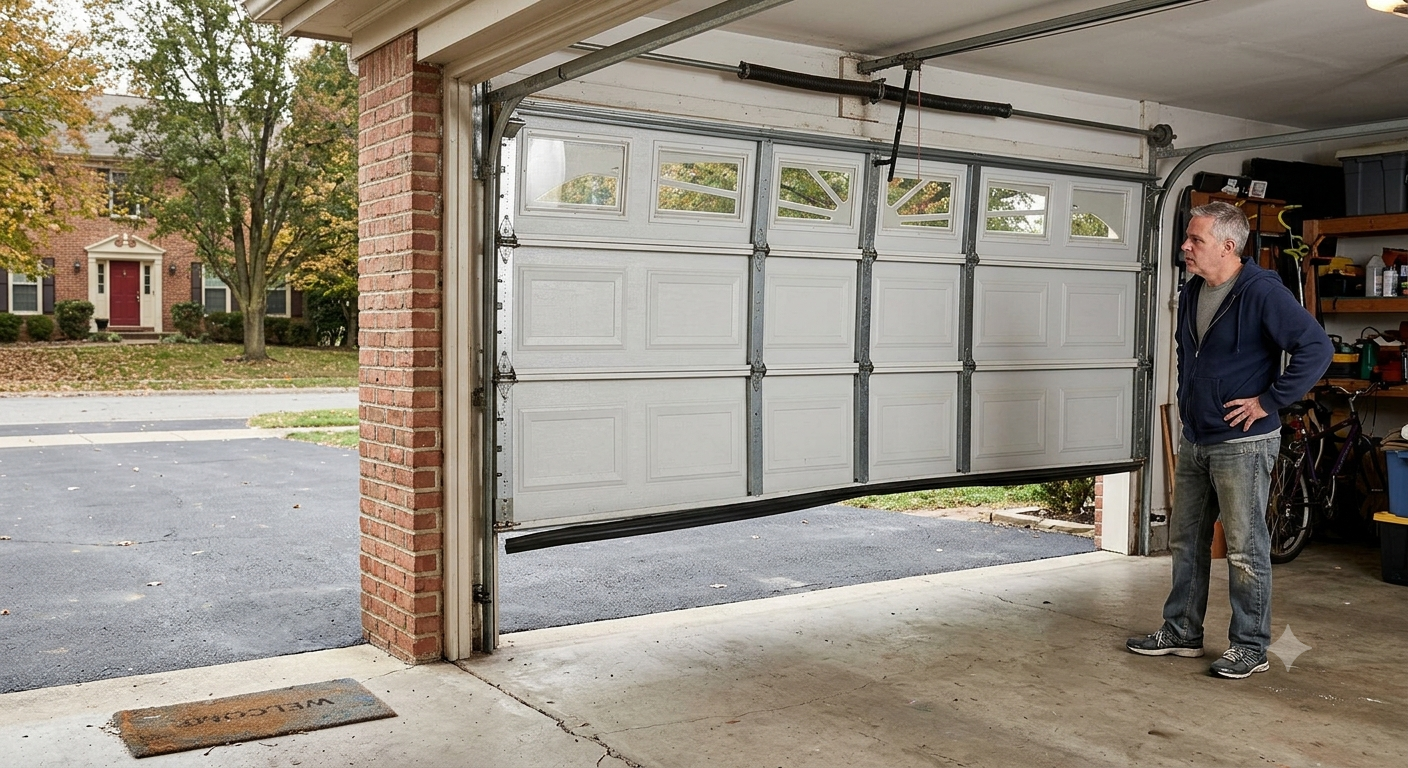
A door that sags, looks crooked or has dropped out of the track needs to stay closed until a technician checks it. Springs are the part most likely to fail, especially in cold weather and our post on why garage door springs fail in winter explains the warning signs.
4. Check Door Balance and the Manual Release
A properly balanced door is easier on the opener and safer to operate. It also lets you open the door by hand when the power is out.
How to check it:
- With the door fully closed, pull the emergency release cord. This disconnects the door from the opener.
- Lift the door by hand about halfway.
- A balanced door should move smoothly and stay close to where you left it.
- Lower it carefully then reconnect the opener by following your manual.
If the door feels very heavy, slams down or will not hold position, stop. Those are signs of a spring problem and further attempts to lift it can lead to injury. Only use the release with the door closed and keep fingers away from moving parts and pinch points.
Other Garage Door Safety Habits Worth Building
Beyond the four checks, a few simple habits reduce risk:
- Keep remotes and wall buttons away from young children
- Watch the door until it has fully closed or opened
- Keep people and pets clear of the door’s path
- Do not try to repair springs or cables yourself
- Pay attention to new noises since they often signal wear before a failure
Our guide to garage door noises and related services can help you tell a minor sound from a real problem. Annual professional maintenance also helps catch what a quick home check can miss. Our planned maintenance covers up to three doors and openers.
What Repairs Usually Cost
If one of these checks turns up a problem, the repair is often smaller than people expect. Our Alabama garage door repair cost guide uses 2026 national HomeAdvisor figures and puts typical repairs at about $155 to $379, with an average near $265. Your own cost depends on your door and the part that needs work so use that range as a starting point and not as a quote.
When an Older Door or Opener Is Not Worth Saving
A single failed part usually justifies a repair. A door that fails several checks at once may be a different story. If the door is warped, sections are damaged and the hardware is worn throughout, a new door can be the safer and more economical choice over time.
We install doors from Clopay and Amarr, including insulated steel options like Modern Steel. You can see finished work in our photo gallery. We also offer financing options powered by Synchrony Financial, subject to approval.
Book a Garage Door Safety Inspection
Affordable Garage Doors is a family owned company serving Alabama homeowners since 2007. We are licensed and insured and hold an A+ rating with the Better Business Bureau. Our technicians serve Birmingham, Montgomery, Tuscaloosa, Hoover, Vestavia Hills and nearby areas, with local phone lines for each.
If your door failed any of these checks or you simply want a professional opinion, request a free estimate or call (866) 678 3667. We will tell you what needs attention and what can wait.
FAQs
How often should I test my garage door safety features?
A quick monthly check of the auto reverse and sensors is a sensible habit. Add a yearly professional inspection for the springs, cables and hardware.
Can I bypass the safety sensors if they keep failing?
No. Bypassing them removes protection that is there for a reason. Misalignment is a common cause and is usually quick to fix.
Why does my garage door reverse for no reason?
An obstruction, dirty or misaligned sensors or a door that binds in the track can all cause it. If cleaning the sensors does not help, have the door inspected.
Should children use the garage door remote?
It is best to keep remotes and wall buttons out of reach of young children. Older kids should know never to run under a moving door.
How much does it cost to fix a garage door safety problem?
It depends on the cause from small sensor adjust