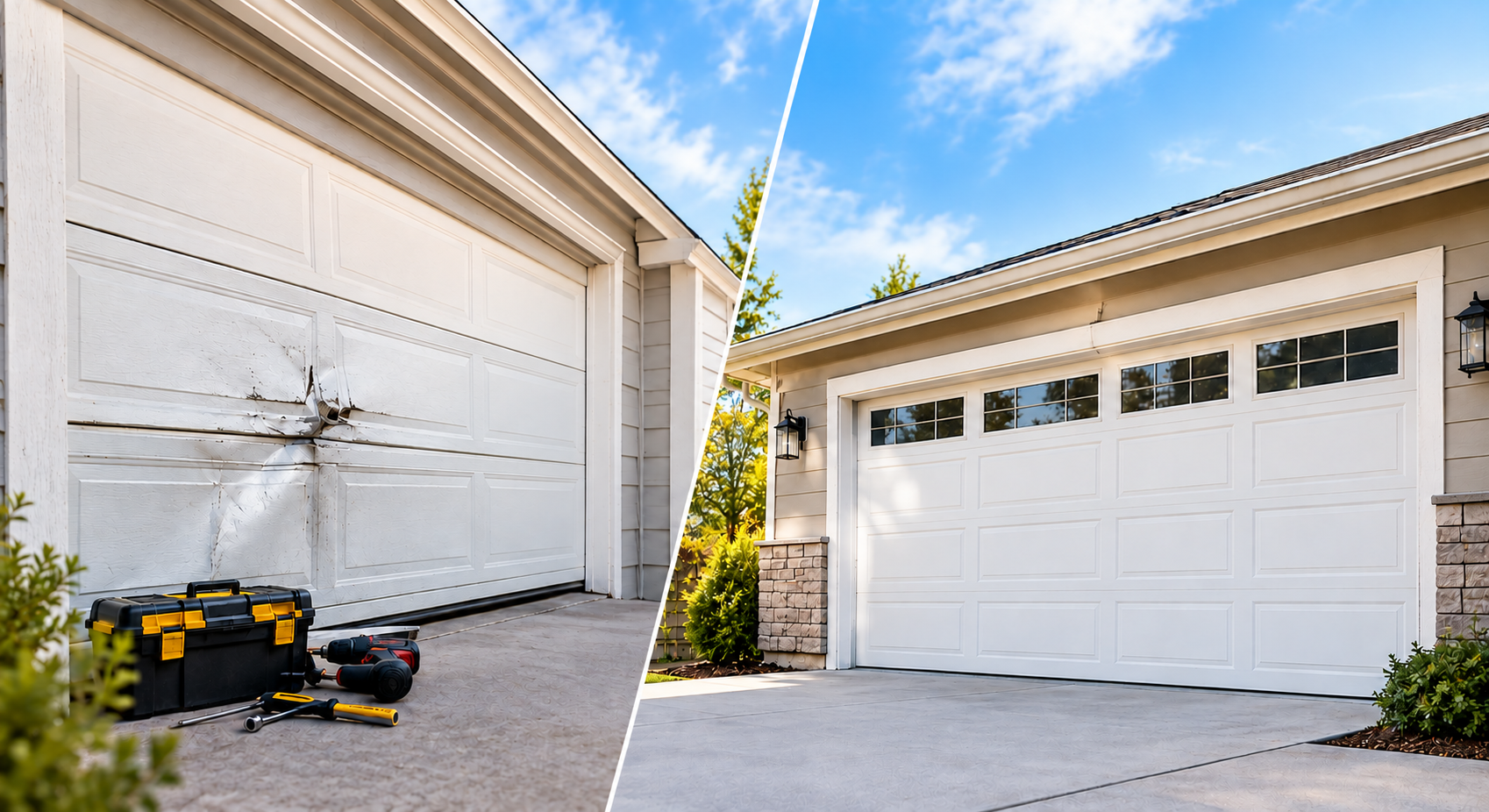
A loud bang from the garage on a cold morning always means one thing. A torsion spring just gave out. Garage door springs do not fail at random. Cold weather changes how steel behaves and once a spring is already worn from years of daily use. That change is often enough to push it past its limit. We see this pattern every winter across Alabama and knowing why it happens makes the warning signs much easier to catch before your door stops working.
Why Cold Weather Is Hard on Garage Door Springs
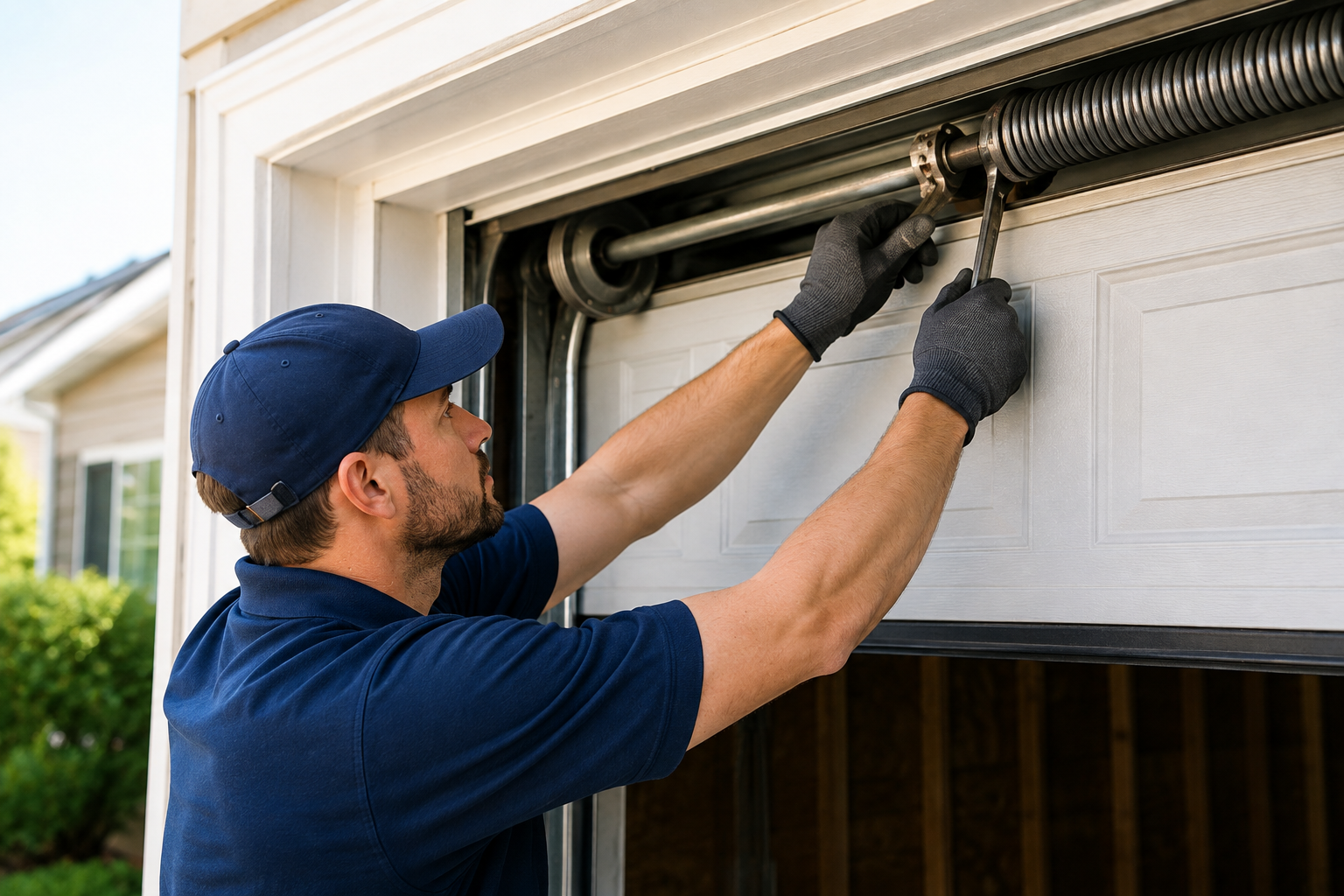
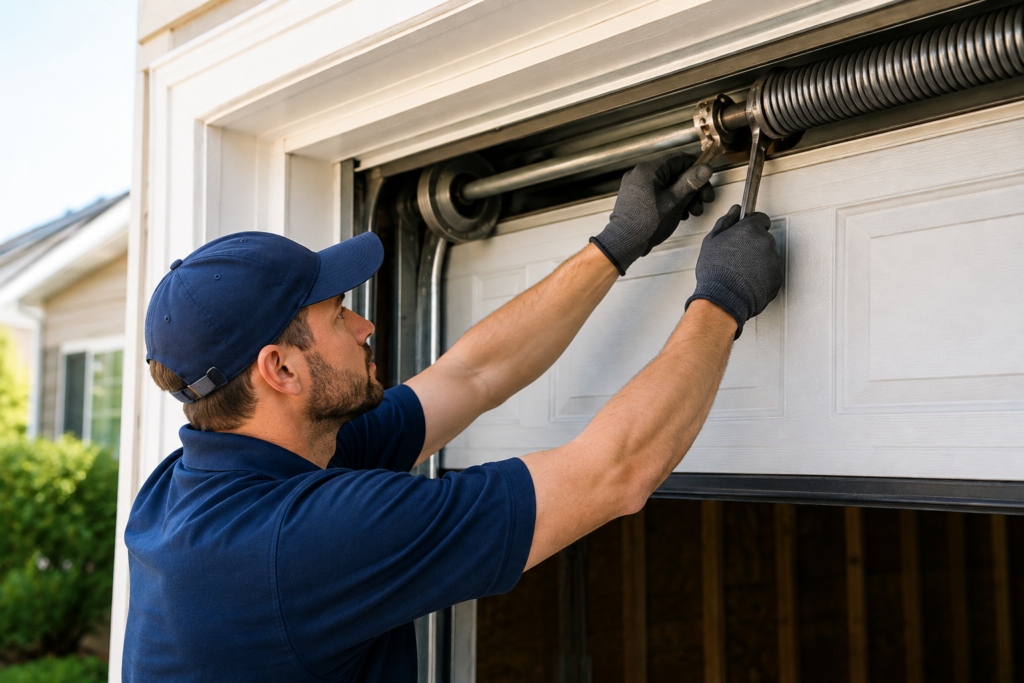
Torsion springs are made from tightly wound steel wire. The spring twists and untwists every time the door opens or closes. Over years of this motion, tiny cracks begin to form inside the metal. On their own, these cracks are not a big deal. Cold weather changes that.
Cold temperatures can affect the behaviour of the spring, lubricant and other garage door components. For a spring that has already accumulated thousands of operating cycles, seasonal temperature changes may be one more factor when the component is close to failure.
Alabama Winters and Temperature Swings
Alabama does not get the extreme, steady cold that northern states see and that is part of why this problem catches people off guard. National Weather Service data for Birmingham shows the region’s normal winter average sits in the mid to upper 40s with regular swings between cold mornings and much milder afternoons. Those temperature swings can affect the way the door and its hardware operate, particularly when a spring is already worn from repeated cycles.
That is why so many spring failures here happen during an ordinary cold stretch and not just a rare deep freeze.
Added Strain Beyond the Cold Itself
Temperature is not the only thing working against your spring in winter. A few other seasonal habits pile on top of the wear already happening inside the coil.
- Thicker lubricant – Cold temperatures can make some lubricants more viscous, which may affect the movement of certain components. Using a garage door lubricant as recommended for your system can help keep moving parts operating smoothly.
- Extra weight from moisture – Rain or a bit of ice on a cold door adds weight, which means more load on the spring.
- More frequent use – Additional opening and closing cycles add wear to a spring that may already be near the end of its service life.
- Delayed maintenance – Many homeowners put off garage door upkeep during the busy holiday season, right when the door gets used the most.
None of these alone will break a spring. Stack them on top of cold, tightened steel and they add up fast.
Warning Signs Your Spring Is About to Fail
A spring rarely fails without warning. Watch for these signs as the weather turns colder.
- The door feels heavier than usual when lifted by hand.
- The opener strains, slows down or stops partway through.
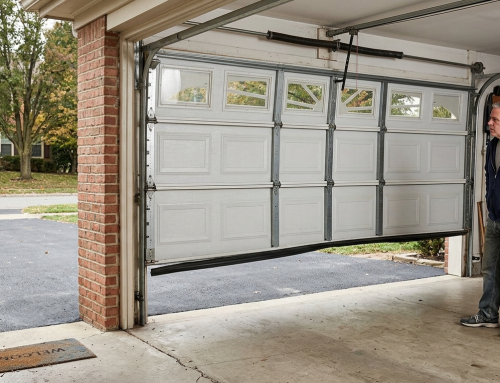
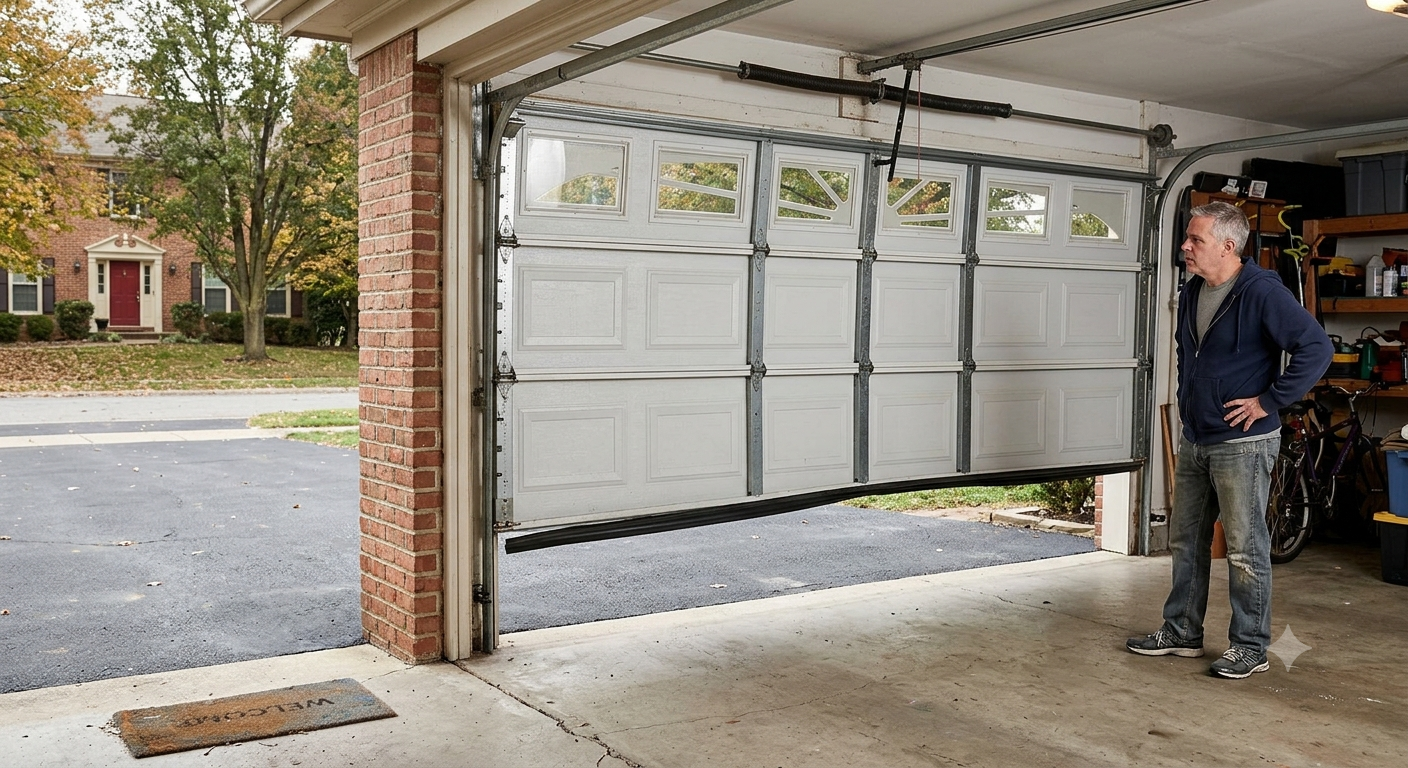
- The door looks crooked or moves unevenly as it opens.
- You can see a gap in the coil of the torsion spring above the door.
- New creaking or grinding sounds during operation.
Having these signs checked early may help identify a spring or door problem before the door becomes unusable.
What a Spring Repair Typically Costs
Spring Repair
Torsion spring replacement is one of the more common repair calls we get and pricing depends on the type of spring and the size of the door. National data from HomeAdvisor puts most garage door repairs, spring replacement included, in the range of 155 to 379 dollars, averaging around 265 dollars. A local inspection is the only way to get an exact number for your door but this range gives a fair starting point for budgeting before a technician arrives.
What to Do If Your Spring Breaks in Winter
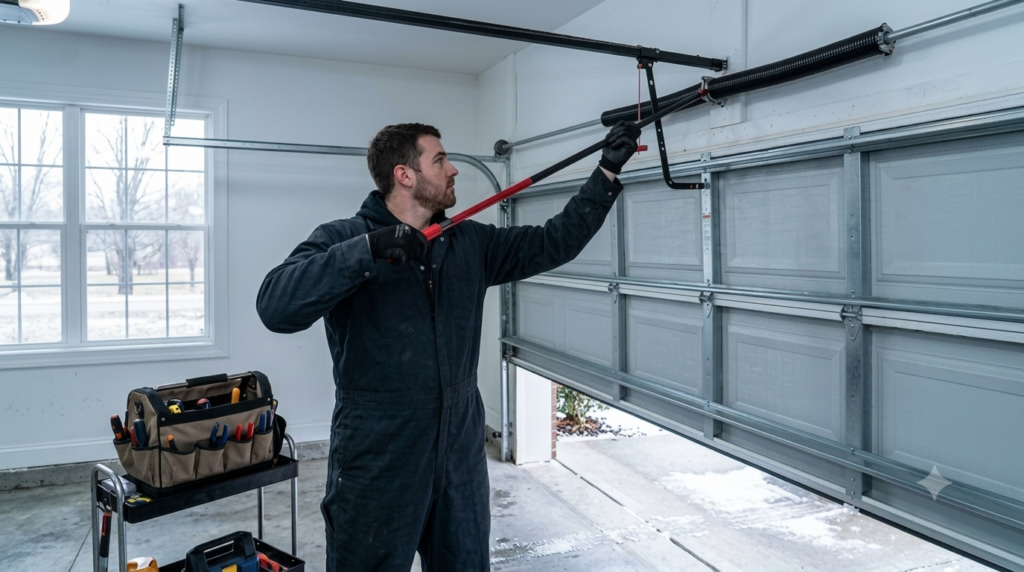
If you hear a loud bang and the door will not budge, stop. Do not force it. A broken spring means the door has lost the support it needs to move safely and pushing the opener to keep trying can burn out the motor. The U.S. Consumer Product Safety Commission has flagged garage door hardware, springs included, as a real source of home injuries for decades, which is exactly why this repair should always go to a trained technician.
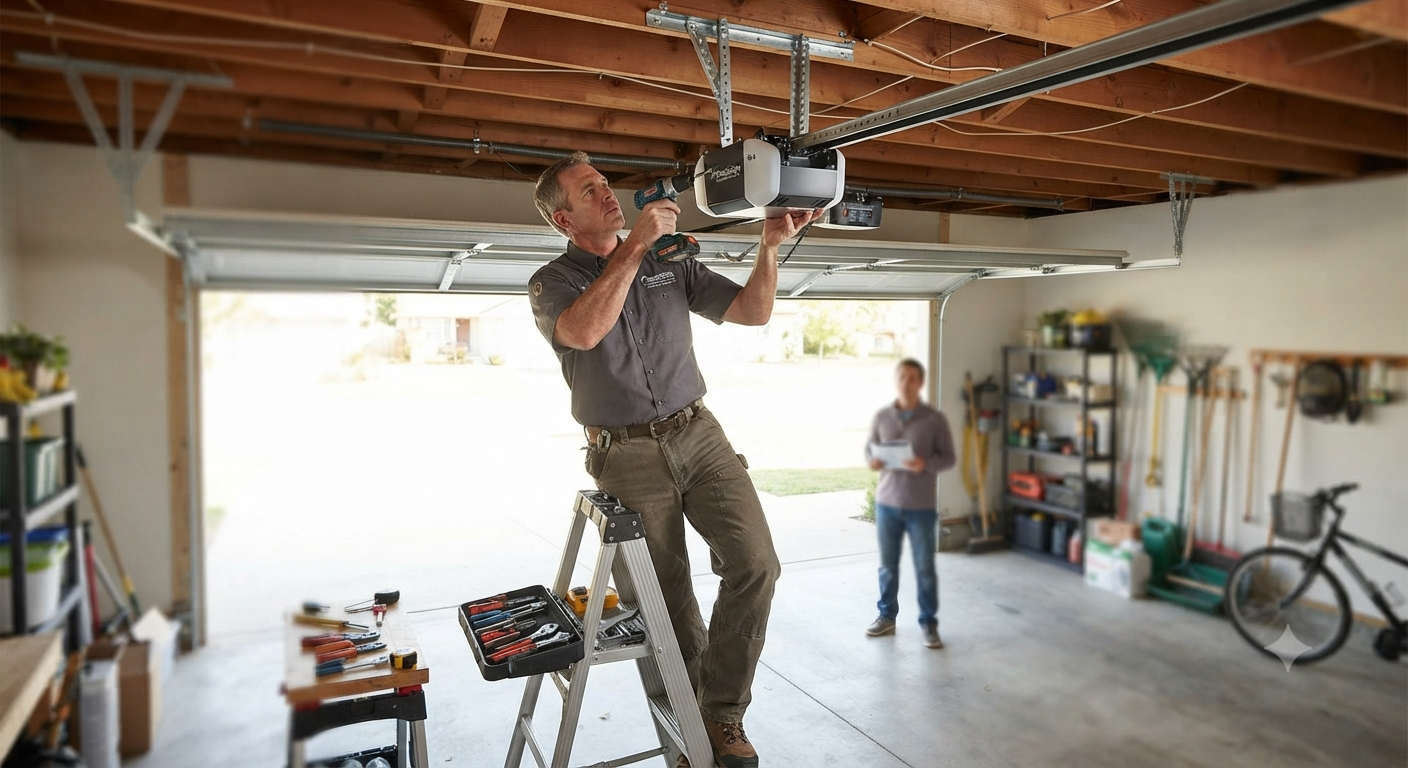
Our garage door repair team handles torsion spring replacement regularly and we can usually get a technician out fast during peak winter failure season.
Preventing Winter Spring Failures
A little maintenance before winter sets in goes a long way toward avoiding an emergency call later.
- Have springs inspected once a year especially if they are more than five to seven years old.
- Follow the manufacturer’s recommendations and use a suitable lubricant on the components that require lubrication.
- Pay attention to how the door sounds and feels through the fall. A change often shows up before a full failure.
- Ask a technician to check the door’s balance during a routine visit, since uneven tension puts extra strain on one side.
We offer the full range of garage door services, maintenance and tune ups included, so a seasonal check is easy to schedule before winter arrives.
Repair or Replace: What Makes Sense for an Aging Spring
Replacing that one part is the right call if a spring has already failed. If one spring breaks, the matching spring has generally gone through a similar number of cycles. A technician can inspect both and determine whether replacing one or both makes sense.
This is different from replacing the whole door. A spring failure on an otherwise sound door may only require a targeted spring repair rather than full garage door replacement. Replacement usually only makes sense once several parts are wearing out at once or the door is old enough that matching parts are hard to find. Our technicians can walk you through which situation fits your door.
Getting Help Before or After a Spring Fails
Winter spring failures are one of the most predictable calls we get across Alabama and a quick check before the cold sets in costs a lot less than an emergency visit after the fact.
Reach out to us and we will send a technician to take care of it if your garage door feels heavier than usual, sounds different or has already stopped working.
FAQs
Can I replace a garage door spring myself?
No. This is not a safe do it yourself repair. Torsion springs hold extreme tension and should always go to a trained technician.
How long do garage door springs generally last?
Many residential garage door springs are rated for around 10,000 cycles, but actual service life depends on how frequently the door is used and the condition of the overall system.
Does homeowners insurance cover a broken garage door spring?
Coverage depends on the policy and the cause of the damage. Spring failure caused by normal wear may not be covered, so check your specific policy before assuming a repair is reimbursable.
Should I lubricate my garage door before winter?
Yes. A light coat of garage door specific lubricant on the springs, hinges and rollers helps reduce strain in cold weather.
Can I use my garage door if only one of two springs breaks?
No. Both springs share the load and running the door on just one can cause it to fall unevenly or damage the opener.